Wednesday, March 5, 2008

"Popcorn"

"Popcorn" is a famous early synthpop instrumental. Composer Gershon Kingsley first recorded it for his 1969 album Music to Moog By.

Stan Free, member of the First Moog Quartet, rerecorded the instrumental with his band Hot Butter in 1972, which became the first primarily electronic-based piece of music to reach the American popular music charts. The record was one of a rash of Moog synthesizer-based releases that characterized "synth-pop" of the 1960s and 1970s.

The composer himself on piano. Just beautiful.


The original by Hot Butter that hit number one.

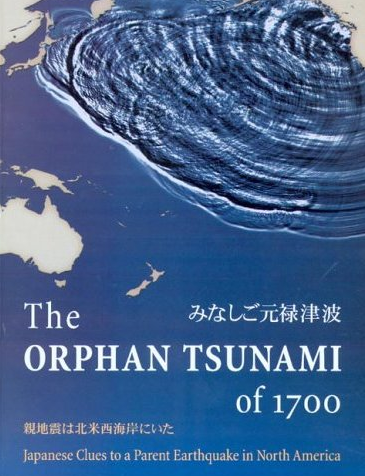
Computer simulation of Pacific Northwest Earthquake, January 26, 1700, 9:00 PM

Monday, March 3, 2008

The molecular machines in our bodies

This stunning animation shows how cells move around the body in the bloodstream, but primarily shows the molecular machines in our cells and how they move within the cell. Beautiful.


Here is a longer, narrated version. Don't be put off by the many words you probably have not heard before. The point is these molecules behave like small machines and robots... some even walk along paths dragging loads for delivery to specific locations in the cell.

Netscape Navigator goes to cyberheaven

The first browser most of us ever saw.
It was spectacular.... beautiful... a leap from a computer that was a glorified typewriter to the portal we have today that takes us from the past to the present to the future and from the end of the Universe to the subatomic and back again... and makes us laugh and let's us remember... and speaks to us... and gives us video phone for free... and the ability to find things... We had never seen anything like it...

As of March 1, no longer supported, but you can still get the final incarnation at

http://browser.netscape.com

I installed it and am using it for old time's sake.

Forget radio on the radio

All Things Considered, Talk of the Nation, Prairie Home Companion... more than a decade of programs online, all for free and on demand.

http://www.npr.org

And all of BBC Radio.

http://www.bbc.co.uk/radio

Sunday, March 2, 2008

A Living God


From The Atlantic Monthly, December 1896. By Lafcadio Hearn.

From immemorial time the shores of Japan have been swept, at irregular intervals of centuries, by enormous tidal waves,--tidal waves caused by earthquakes or by submarine volcanic action. These awful sudden risings of the sea are called by the Japanese tsunami.
Hamaguchi Gohei [sic, Goryo; see link below] (浜口梧陵) ... was an old man at the time of the occurrence that made him famous. He was the most influential resident of the village to which he belonged... The people usually called him Ojiisan, which means Grandfather; but, being the richest member of the community, he was sometimes officially referred to as the Chôja.
Hamaguchi's big thatched farmhouse stood at the verge of a small plateau overlooking a bay. The plateau, mostly devoted to rice culture, was hemmed in on three sides by thickly wooded summits. From its outer verge the land sloped down in a huge green concavity, as if scooped out, to the edge of the water; and the whole of this slope, some three quarters of a mile long, was so terraced as to look, when viewed from the open sea, like an enormous flight of green steps, divided in the centre by a narrow white zigzag--a streak of mountain road. Ninety thatched dwellings and a Shintô temple, composing the village proper, stood along the curve of the bay...
One autumn evening Hamaguchi Gohei was looking down from the balcony of his house at some preparations for a merry-making in the village below. There had been a very fine rice-crop, and the peasants were going to celebrate their harvest by a dance in the court... The old man could see the festival banners fluttering above the roofs of the solitary street, the strings of paper lanterns festooned between bamboo poles, the decorations of the shrine, and the brightly colored gathering of the young people. He had nobody with him that evening but his little grandson, a lad of ten; the rest of the household having gone early to the village. He would have accompanied them had he not been feeling less strong than usual.
And presently an earthquake came. It was not strong enough to frighten anybody; but Hamaguchi, who had felt hundreds of shocks in his time, thought it was queer,--a long, slow, spongy motion. Probably it was but the after-tremor of some immense seismic action very far away. The house crackled and rocked gently several times; then all became still again.
As the quaking ceased Hamaguchi's keen old eyes were anxiously turned toward the village. It often happens that the attention of a person gazing fixedly at a particular spot or object is suddenly diverted by the sense of something not knowingly seen at all,--by a mere vague feeling of the unfamiliar in that dim outer circle of unconscious perception which lies beyond the field of clear vision. Thus it chanced that Hamaguchi became aware of something unusual in the offing. He rose to his feet, and looked at the sea. It had darkened quite suddenly, and it was acting strangely. It seemed to be moving against the wind. It was running away from the land.
Hamaguchi Gohei himself had never seen such a thing before; but he remembered things told him in his childhood by his father's father, and he knew all the traditions of the coast. He understood what the sea was going to do. Perhaps he thought of the time needed to send a message to the village, or to get the priests of the Buddhist temple on the hill to sound their big bell. . . . But it would take very much longer to tell what he might have thought than it took him to think. He simply called to his grandson:--"Tada!--quick,--very quick! . . . Light me a torch."
The child kindled a torch at once; and the old man hurried with it to the fields, where hundreds of rice-stacks, representing most of his invested capital, stood awaiting transportation. Approaching those nearest the verge of the slope, he began to apply the torch to them,--hurrying from one to another as quickly as his aged limbs could carry him. The sun-dried stalks caught like tinder; the strengthening sea breeze blew the blaze landward; and presently, rank behind rank, the stacks burst into flame, sending skyward columns of smoke that met and mingled into one enormous cloudy whirl. Tada, astonished and terrified, ran after his grandfather, crying,--"Ojiisan! why? Ojiisan! why?--why?"
But Hamaguchi did not answer: he had no time to explain; he was thinking only of the four hundred lives in peril. For a while the child stared wildly at the blazing rice; then burst into tears, and ran back to the house, feeling sure that his grandfather had gone mad. Hamaguchi went on firing stack after stack, till he had reached the limit of his field; then he threw down his torch, and waited.
The whole village was coming; and Hamaguchi counted. All the young men and boys were soon on the spot, and not a few of the more active women and girls; then came most of the older folk, and mothers with babies at their backs, and even children,--for children could help to pass water; and the elders too feeble to keep up with the first rush could be seen well on their way up the steep ascent. The growing multitude, still knowing nothing, looked alternately, in sorrowful wonder, at the flaming fields...
"Grandfather is mad,--I am afraid of him!" sobbed Tada, in answer to a number of questions. "He is mad. He set fire to the rice on purpose: I saw him do it!"
"As for the rice," cried Hamaguchi, "the child tells the truth. I set fire to the rice. . . . Are all the people here?"
"All are here, or very soon will be. . . . We cannot understand this thing."
"Kita!" shouted the old man at the top of his voice, pointing to the open. "Say now if I be mad!"
Through the twilight eastward all looked, and saw at the edge of the dusky horizon a long, lean, dim line like the shadowing of a coast where no coast ever was,--a line that thickened as they gazed, that broadened as a coast-line broadens to the eyes of one approaching it, yet incomparably more quickly. For that long darkness was the returning sea, towering like a cliff, and coursing more swiftly than the kite flies.
"Tsunami!" shrieked the people; and then all shrieks and all sounds and all power to hear sounds were annihilated by a nameless shock heavier than any thunder, as the colossal swell smote the shore with a weight that sent a shudder through the hills, and with a foam-burst like a blaze of sheet-lightning. Then for an instant nothing was visible but a storm of spray rushing up the slope like a cloud; and the people scattered back in panic from the mere menace of it. When they looked again, they saw a white horror of sea raving over the place of their homes. It drew back roaring, and tearing out the bowels of the land as it went. Twice, thrice, five times the sea struck and ebbed, but each time with lesser surges: then it returned to its ancient bed and stayed,--still raging, as after a typhoon.
On the plateau for a time there was no word spoken. All stared speechlessly at the desolation beneath,--the ghastliness of hurled rock and naked riven cliff, the bewilderment of scooped-up deep-sea wrack and shingle shot over the empty site of dwelling and temple. The village was not; the greater part of the fields were not; even the terraces had ceased to exist; and of all the homes that had been about the bay there remained nothing recognizable except two straw roofs tossing madly in the offing. The after-terror of the death escaped and the stupefaction of the general loss kept all lips dumb, until the voice of Hamaguchi was heard again, observing gently,--
"That was why I set fire to the rice."
He... now stood among them almost as poor as the poorest; for his wealth was gone--but he had saved four hundred lives by the sacrifice.
Whereupon the people woke up to the knowledge of why they were alive, and began to wonder at the simple, unselfish foresight that had saved them; and the headmen prostrated themselves in the dust before Hamaguchi Gohei, and the people after them.
Then the old man wept a little, partly because he was happy, and partly because he was aged and weak and had been sorely tried.
"My house remains," he said, as soon as he could find words, automatically caressing Tada's brown cheeks; "and there is room for many. Also the temple on the hill stands; and there is shelter there for the others."
Then he led the way to his house; and the people cried and shouted.
The period of distress was long, because in those days there were no means of quick communication between district and district, and the help needed had to be sent from far away. But when better times came, the people did not forget their debt to Hamaguchi Gohei. They could not make him rich; nor would he have suffered them to do so, even had it been possible. Moreover, gifts could never have sufficed as an expression of their reverential feeling towards him; for they believed that the ghost within him was divine. So they declared him a god, and thereafter called him Hamaguchi DAIMYÔJIN, thinking they could give him no greater honor;--and truly no greater honor in any country could be given to mortal man. And when they rebuilt the village, they built a temple to the spirit of him, and fixed above the front of it a tablet bearing his name in Chinese text of gold; and they worshiped him there, with prayer and with offerings. How he felt about it I cannot say;--I know only that he continued to live in his old thatched home upon the hill, with his children and his children's children, just as humanly and simply as before, while his soul was being worshiped in the shrine below. A hundred years and more he has been dead; but his temple, they tell me, still stands, and the people still pray to the ghost of the good old farmer to help them in time of fear or trouble.


Ah, the above completely mythologized "Long, long ago, in a land far, far away" Lost Horizon version is infinitely preferable to the reality, so spoiler alert! if you read this link.
http://en.wikipedia.org/wiki/Hamaguchi_Goryo

The comedy

Civilization, despite its sophistication, pretensions, and many accomplishments, owes its existence to six inches of topsoil and the fact that it rains.

We pass through this world but once. Few tragedies can be more extensive than the stunting of life, few injustices deeper than the denial of an opportunity to strive or even to hope, by a limit imposed from without, but falsely identified as lying within. Stephen Jay Gould

Barbarism is needed every four or five hundred years to bring the world back to life. Otherwise it would die of civilization. Edmond and Jules de Goncourt

The Universe is foamy!

One of the biggest discoveries of the last 20 years is that the galaxies in the Universe are not distributed uniformly through space. There are huge voids with nearly nothing surrounded by filaments along which most of the galaxies are associated. It is as if galaxies were distributed along the films of soap bubbles in a foam.

The hypothesis is that "dark matter" is causing the galaxies to clump together.


If this is true, then what would happen when dark matter streams intersect?

Maybe polar ring galaxies (also sometimes called "polar disk galaxies")?

http://space.newscientist.com/article/mg19726455.500-x-marks-the-spot-in-dark-matter-web.html

What in Heaven is this?


Really weird type of galaxy called a "polar ring galaxy" (sometimes "polar disk galaxy").


A simulated galaxy will be rotated to show the 3D structure, and then photos of real galaxy NGC 4650A appears at the end.

Saturday, March 1, 2008

Why do we have a leap day?

A great example of the glorious mess produced when using fudge factors to make things in Nature come out the way we want.

http://www.npr.org/templates/story/story.php?storyId=87803957

The Streisand Effect

An attempt to censor or remove information backfires. Millions of people try to get what has been banned. Hilarity ensues. Susan says: "What a Funny Girl"!

http://www.npr.org/templates/story/story.php?storyId=87809195

http://en.wikipedia.org/wiki/Streisand_effect


Quick, see Bab's house before she sues again and the picture is removed!
http://www.cnsnews.com/storyimages/2003/streisand_big.jpg

The greatest scourges of life

The Argument from Personal Ignorance and The Argument from Personal Incredulity.

Otherwise known as

"I have no idea what you are talking about; therefore, it is wrong"

and

"I don't believe it (because I don't like it); therefore, it is wrong"

I know many people who have honed these ideas into the finest of the human arts and who practice them on a daily basis.

http://www.theonion.com/content/opinion/you_know_whats_stupid

Wednesday, February 27, 2008

View from Earth 100 trillion years in the future


Truly stunning video, from the Big Bang to the end of cosmology.

http://www.sciam.com/article.cfm?id=the-end-of-cosmology-video

Assuming the Earth is not consumed by the Sun during its Red Giant stage...
By 100 trillion years in the future, the Sun will have burned out long ago, and the Earth will have been ejected from the Solar system to wander as a rogue planet, alone in space. Due to the accelerating expansion of the universe, nearly all the galaxies recede from the Earth faster than the speed of light, and these galaxies are therefore no longer visible because their light cannot travel fast enough. At few of the nearest galaxies are still visible in the night sky in the illustration above, but they too will accelerate away, and the sky will become a black void for eternity.

Eventually, all of the matter making up the Earth will convert back to the energy from which it came, and all that will be left will be the void.

http://www.sciam.com/article.cfm?id=the-night-sky-will-fade-to-black

Monday, February 25, 2008

Great, unnerving audio effects

This is really great... and kinda creepy... you really need earphones.... and make sure the left earphone is in the left ear, and the right earphone is in the right ear.

Don't listen to this late at night... it is really creepy...

http://www.youtube.com/watch?v=IUDTlvagjJA

Life began... in ice?

This spectacular article the February 2008 Discover pulls all the pieces together, and after years of reading about all the bits and pieces, this smells right.

http://discovermagazine.com/2008/feb/did-life-evolve-in-ice

As I mentioned before, I think it is quite likely that we are not native to this planet. Life was probably seeded on Earth from Mars, or even from the ice moons of Jupiter or Saturn, because they were smaller and cooled more quickly than the Earth did. Asteroid and comet impacts then spewed huge amounts of material into space, and the archea cells were protected by the material and low temperatures in space. Life coming to Earth from another planet is called exogenesis.

As I mentioned before, I think it is also likely that we are not native to this star system. Life probably first arose on a planet billions of years ago in another star system, and material encasing archea cells was spewed throughout the entire galaxy long before the Earth formed. One or a few planets seeding the entirety of the galaxy is called panspermia.

So we can now sketch out the overall sequence.
After the Big Bang, the universe was mostly hydrogen and a little helium.
Stars formed and went supernova, producing the heavier elements. This process was repeated, and the amounts of heavier elements progressively increased.
Supernovas were more common toward the center of the galaxy, so there were more heavy elements toward the center of the galaxy.
On the other hand, if a supernova goes off nearby, it can easily sterilize the entire surface of a planet to a substantial depth, so being too near the center, while it would mean a lot of heavy elements would be present, would also mean that the surface would be sterilized fairly often. (However, now that we know how many archea live at great depths in the Earth, these sterilizations might actually present no problem at all.)
The Solar system is 4.5 billion years old, but we could easily imagine parts of the galaxy to have been rich in heavy elements 10 billion years ago.
So it is easy to imagine that on an ice planet in another star system 10 billion years ago, the processes described above in the Discover article took place, and the first archea cells formed and colonized the planet quickly.
Some cells were then blasted into space by impacts, encased in material that quickly cooled and protected the cells.
The materials spread across the galaxy relatively quickly, and some of it eventually landed on the ice moons of Jupiter and Saturn, and later, on a Mars covered by oceans, while the Earth was still molten.
The cells completely populated the moons and Mars.
Impacts on the ice moons and Mars ejected huge amounts of material into space, and some of it landed on Earth. If the Earth was still too hot, the cells would have died, but as soon as the Earth cooled so that there could be liquid water, the seeding would take place, and the cells then completely populated the Earth as it cooled.
So the processes described in the Discover article may actually have happened on another planet long before the Solar system formed. (And since our galaxy is made up of many smaller galaxies that have been incorporated into it, the origin of life may even have occurred in another galaxy.)
We may have good evidence for life on Mars in just a few months. In later missions, when samples are eventually returned from Mars and the DNA of the organisms is examined, if the DNA seems to be similar to that of the archea found on Earth, we could reasonably suppose that these cells had a common ancestor long before the Earth formed. That would be the greatest discovery of all time (so far) and would suggest that there are many planets in the galaxy with at least simple lifeforms... and that those lifeforms are all related... and that they are related to us.
We are on the verge of being able to detect Earthlike planets in other star systems.
Within the next few decades, we will have scanned a substantial part of the galaxy for other technical civilizations, so in our lifetimes, we will have either found another civilization, or we will begin to suspect that we are rare.

Here is part one of a program showing how life could be carried from planet to planet by impact debris.

Sunday, February 24, 2008

Yellowstone is a supervolcano

Yellowstone is the caldera of a supervolcano. The last time it erupted 640,000 years ago, it was a good thing we weren't around... the US was uninhabitable and the rest of the planet was not good either.

http://video.google.com/videoplay?docid=-6742266552982808356&q=yellowstone+supervolcano&total=101&start=20&num=10&so=0&type=search&plindex=5

Emergency Voice Mail from NTT East

When a major disaster, such as an earthquake occurs, NTT East may automatically block most calls in order to keep lines clear for responder services. When this happens, it is very likely that no one will be able to call you on your landline, and you may not be able to call other landlines in certain areas. Mobile phone calls may also be blocked in certain areas, although text messaging should always be possible.

So that you may let others know how you are, during such an emergency, voice mail can be created, and others can hear the voice mail by dialing your number.

The number to dial is 171.

http://www.ntt-east.co.jp/saigai_e/voice171/index.html

Click on the "171 Animation".

Wednesday, February 20, 2008

Sometimes, the more you stare at a word, the stranger it looks

"Jamais vu" (French for "never [before] seen") means that a known object or situation (or even a person!) seems strangely unfamiliar or odd. "Jamais vu" is sort of the opposite of deja vu ("already seen").

When the object that seems strange is a word, this is called "word alienation". Most people can induce word alienation by, for example, simply staring at the word "and" for several minutes. Another way is to write, for example, the word "door", very quickly 30 times per minute for a minute or two. Most people will experience the word seeming to become progressively odd, and the more you stare, the stranger it looks.

In the usual course of reading, a word has a form, a meaning, and a function in a sentence, and they are experienced briefly; when the word is instead viewed repeatedly, only the form of the word is experienced, and the form becomes progressively dissociated from the meaning.
It seems that being tired or having worked many hours often increases the probability of word alienation occurring.

http://www.abc.net.au/science/news/health/HealthRepublish_1689668.htm

http://en.wikipedia.org/wiki/Jamais_vu

Monday, February 18, 2008

The question of convergence

For a long time, the question was: would TVs become computers, or would computers become TVs?

I've used my computer as a TV for years, watching DVDs and videos over the Net. In fact, I sometimes do not turn on my TV for weeks.

Now, TVs are starting to come with jacks for connection to the Net.

http://www.latimes.com/business/la-fi-webtv18feb18,0,5939575.story

Maybe in the end both will happen.

Sunday, February 17, 2008

The credit card

Emmy for Investigative Journalism.

http://www.pbs.org/wgbh/pages/frontline/shows/credit/view/

A tsunami is not like any wave you have ever seen

Many full length documentaries for free

There are many full length documentaries available for free on the net now.

Frontline
http://www.pbs.org/wgbh/pages/frontline/
http://www.pbs.org/wgbh/pages/frontline/view/

YouTube usually limits videos to 10 minutes, but Google does not.
Go to Google, choose Video (under "more") and search.
http://video.google.com/?hl=en&tab=wv
Try BBC Horizon.

How the elements were made

The early universe contained only hydrogen and a little helium. Where did the heavier elements come from?

http://www.valdosta.edu/~cbarnbau/astro_demos/stellar_evol/evol_3.html

Amazing misunderstanding by the well-intentioned

Children were taken away, people were sent to prison.

You can find the transcript by Google search.

The one minute opening will give you the idea.


This will change the way you view the world

Not for the faint of heart...

Thursday, February 14, 2008

Is this true? If so, millions of people in the UK now know about it.

The lead story at The Independent says that pigs are being shipped live from Canada to Hawaii so that the pigs can be sold as "island pork".

"Many live exports are undertaken to make the fraudulent claim that the animals are [locally] reared... Canadian pigs are condemned to a 4,500-mile journey by land and sea to Hawaii, so that, when slaughtered, their carcasses can be sold as "Island Produced Pork". For nine days, hundreds of pigs are crammed together in the dark, standing in their own excrement."

Click on the second video clip, entitled "Canada to Hawaii: Pigs transported for nine days".

http://www.independent.co.uk/life-style/food-and-drink/news/exposed-the-long-cruel-road-to-the-slaughterhouse-781364.html

Tuesday, February 12, 2008

February 12, 1809, and 1859

Next year will be Darwin's 200th birthday and the 150th anniversary of the publication of On the Origin of Species by Means of Natural Selection, or the Preservation of Favoured Races in the Struggle for Life.

Over the next year, there will be many documentaries and special exhibits about Darwin and evolution.

Sunday, February 10, 2008

The end of polaroids

Polaroid has announced that it is getting out of the film making business, so there has been a run on film.

Although I never had a Polaroid camera, someone was taking polaroids at a party on January 1, 2001, and I must admit, they were magical. Watching a picture appear over a few minutes is something that you simply cannot get from taking a picture with a digital camera. The suspense, the fun of watching how it turns out... and the usually very warm tones in the picture.

I knew a world with fewer printed books, printed magazines, and printed newspapers, a world without analog TV transmission, and a world without TV, was coming, but a world without polaroids would also be missing something, and that hadn't occurred to me until I saw this. At least click on the Polaroid Swinger commercial (if you are old enough, you will be humming it... and look who is in the commercial!) and the one with James Garner and Mariette Hartley below.


http://www.npr.org/templates/story/story.php?storyId=19115854

http://blogs.pcworld.com/techlog/archives/006464.html


A newspaper discontinues paper version and goes Internet-only

In what is likely to be the first of many over the next few years, a newspaper has gone Internet-only.

http://www.cbsnews.com/stories/2008/02/09/business/main3812203.shtml

Tuesday, February 5, 2008

GOD is coming

Coming soon: GOD (Googlelike Omniscient Databases)

In a very short while, you will basically be able to pose any question, and either someone will have already fully formulated the answer, or you will be able to get a general idea by looking through the databases yourself.

Although it is shut down now, last week, a company announced that it had gleaned the cell phone numbers of 90 million people in the US. If you wanted the private cell phone number of even a governor, just pay 15 bucks and they would give it to you. The numbers were obtained by searching through public documents.

Is a company doing a bad job? You will soon be able to ask questions about its problems, very specific questions. Considering reroofing? Why not look at a ranking of companies, they types of jobs they do, customer satisfaction, law suits, etc.?

Things like this, which previously required a human to notice, will be done automatically for the entirely of literature, scientific publications, news... and in all languages... very soon.
http://www.independent.co.uk/news/europe/spains-nobelwinning-novelist-cela-stole-passages-for-his-book-778029.html


So, there really will be someone watching everything. That "someone" will be other humans who will soon be able to summon highly tailored information for free.

Thursday, January 31, 2008

60 years ago, on January 30, 1948

The Mahatma was assassinated in the garden of a house in Dehli.

Einstein said of him:
Future generations will scarce believe that one such as this did, in flesh and blood, walk upon the face of the Earth.

In view of the current situation, with very rough patches behind us and ahead of us, it is quite reasonable to just want to give up and say humans are hopeless.

But watch "Gandhi" and it might kindle a flicker of hope...

http://www.independent.co.uk/news/world/asia/father-of-the-nation-laid-to-rest-the-afterlife-of-mahatma-gandhi-776189.html

On the other hand, there are many people who are just invincibly stupid. It's genetic (I'm not joking). They are doomed to be like that until they die. Ignore them and stop wasting your time.

Monday, January 28, 2008

Watch the very short clip by Daniel Dennett.

http://thesciencenetwork.org

Then, click on Beyond Belief: Enlightenment 2.0.

Then, click on WATCH.
There are many talks discussing the study of religion.

Tuesday, January 22, 2008

You absolutely must watch this... because there will be blood

Crude: the Incredible Journey of Oil

You have got to watch this. The only explanation for the origin of oil that makes any sense to me.

You can see it online for free. The DVD costs about 30 dollars.

http://www.abc.net.au/science/crude

(And I hate to tell you, but Bush said last week that if the Saudis say the cannot pump any more than they are, they can't. The head of Shell Oil said oil demand will outstrip supply within 7 years. If that doesn't scare the hell out of you, it will after you watch "Crude".)

Nearly 200 years of ever-increasing fossil fuel use is peaking. The 60-year superboom in the US economy, produced by ever-increasing use of ridiculously cheap oil, is coming to an end.

The only possible light at the end of the tunnel is the continuing exponential growth in computing power. This will lead to computer-designed, and/or computer-evolved, photovoltaic panels that perform at reasonably high efficiencies and are very inexpensive. The improved computing power will also increase the ability to bioengineer microorganisms to convert plant materials (such as grass) into biofuels. (The current use of grain to make ethanol is simply nonsense and is driving up food prices. What sense does it make if gasoline is a little cheaper but food is more expensive?)

Wednesday, January 9, 2008

How difficult it is to see even 15 years into the future

Even science fiction writers have difficulty seeing into the future... even 15 years into the future.

In the 1987 episode The Naked Now of Star Trek: The Next Generation, nearly everyone on board goes loopy due to a virus. First Officer Riker vaguely recalls a similar disease and tells Mr. Data to scan the Starfleet database. Mr. Data starts reading at the console very fast and tells Riker it will take a few hours.

Now, everyone just yells: "Google it, you idiots!"

The urn

A slight modification of a line from a poem by Sarah Williams, 1868... I suppose, what it will say on my urn (but in the 29th century, thank you... and no, I am not joking)

I have loved the stars too well to be fearful of the night.

Some people think I am a pessimist

But that is exactly, perfectly wrong.

I am an optimist. That is why I fuss about things. The world does not have to be this way, so an optimist tries to improve it.

Pessimists wouldn't try to fix anything, ever.

Hmm, more than 50% of our DNA is from viruses

http://www.nytimes.com/2008/01/08/science/08angi.html

One in three over 65 falls annually

One in there people over the age of 65 falls annually, with sometimes disastrous consequences. The solution may be very simple.

http://www.nytimes.com/2008/01/08/health/08brod.html?_r=1&oref=slogin&ref=health&pagewanted=print

Monday, January 7, 2008

Eat food. Not too much. Mostly plants.

Michael Pollan's answer to the question of what we should eat.

His drawing of our attention to the bizarre world in which we find ourselves eating is shocking... something like realizing in the middle of a day-long power outage that not having electricity was, until a century ago, called "normal".

I would add that I think a very serious problem is that fruits and vegetables are now completely protected from insects and fungi, and the plants have therefore ceased to produce normal protective chemicals which have always been part of our diet.

Many people say, "If it's got a few bug holes in it, it's safe to eat."
I would go further and say, "If it's got a few bug holes in it, is a little bruised, and looks a little stunted, it probably has the chemicals that were once part of a normal diet and that reduce risk of cancer by inducing DNA checking and repair in our cells."

http://www.guardian.co.uk/society/2008/jan/07/health.foodanddrink

http://www.guardian.co.uk/society/2008/jan/08/health.foodanddrink

Sunday, January 6, 2008

Hau'oli Makahiki Hou!


Believe it or not, everyone in Hawaii used to do this at midnight! You would not believe how noisy it was. It is so loud in the clip below that the mic is simply not recording properly. The actual sound is deafening... no joke... you have to cover your ears.

1971. The economy had boomed. All the kids got fireworks for Christmas. The smoke and the noise were unbelievable.

Just say to anyone from Hawaii:
"I wen' light one ten tausand! Aunty wen' buy 'em fo' me at Arakawa's (or Gem's)."

Mochi. Makizushi. Turkey from the kamado. Potato salad.
Christmas tree still up. The smell of Douglas fir.
The dog freaking out (or passed out on a tranquilizer).
Hanging flares from threads so they would spin around like rockets. Making rockets out of a match head (or a firecracker with almost all the paper peeled off), a piece of foil, and a broom straw. Baby Camels. Uncle's boxes of skyrockets smuggled from the Big Island ("They are only illegal if you get caught!" he would say). Lighting a pack and trying to throw it up in the air as high as you could. Getting burned by the punk. No wind. "Cold". Yelling "Car!" when a car was coming so no one would light a pack. Getting a big bamboo pole and hanging the #10,000 in the driveway... and dad giving you his cigarette and letting you light it for the first time. The way it would stop just when it got to the head. The road and driveway covered in red paper from the firecrackers. Raking it all up. The "duds" going off from time to time.

The remembrance of things past... a world we can see now only in memory...

Iz sings Over the Rainbow at Times Square 2008

Why a third of people have difficulty learning from mistakes

About 30% of people have fewer D2 receptors in the brain because they have a gene variant called A1.

When people with many D2 receptors make a mistake, they feel satisfied that the mistake was a mistake.

When people with fewer D2 receptors make a mistake, they do not feel that the mistake was a mistake, so they continue to do the same wrong thing over and over again.

This would explain why many people are rigid, even in the face of black-and-white evidence. I knew a person who said sashimi was vinegared rice. I told her she had switched the meanings of sushi and sashimi. She said I was wrong. We looked it up in Webster's. She said the dictionary was wrong. If people are rigid about small meaningless things, they cannot possibly correct errors when the problems are big, complicated, and murky.

This is a very serious problem. If we test groups of people who cannot ever admit they are wrong and find that they have an unusual frequency of the A1 gene variant, we could see if there are ways to help them learn to overcome the feelings and be more effective, if they choose to do so. Or we can learn to just give up and let them watch a certain "news" station (Seriously, that "news" station is the saddest thing I have ever seen. They are doomed to stay that way for eternity, and it is all recorded, so people will be laughing at them as long as technical civilization exists, and since the transmissions escape the Earth, it is even being broadcast across the galaxy, so the entire universe will be laughing at them for eternity.)

http://news.scotsman.com/scitech/One-in-three-people-.3636016.jp

Saturday, January 5, 2008

What is the cause of unhappiness?

A Buddhist answer would be:

The difference between expectation and reality.


Reality much worse than expectation = unhappiness

Reality much better than expectation = happiness

Friday, January 4, 2008

The most important factor in a long healthy life is not at all what you think

Now, this is truly astonishing.

What is the single most important factor in living a long healthy life?

We know what the diseases are and the causes of death, but I don't think you can possibly guess what the answer is.

http://www.npr.org/templates/story/story.php?storyId=17765003

http://www.nytimes.com/2007/01/03/health/03aging.html?hp&ex=1167886800&en=d82

(You will have to register to see the New York Times article, but it is easy and you should do it anyway.)

Read the above first

The most important factor in a long healthy life is:

It is not wealth. It is not health care.
It is Education.
The more the better. Even later in life, doing online learning will, on average, put off the day when you go into decline. And if we delay it enough, medical advances will really push it back!

Senator K. K. Ka'umanua

Kent Bowman passed away just before Christmas. We will no longer have the wisdom of Senator Ka'umanua to guide us.

My favorite: Senator Ka'umanua's campaign to install overpasses all around OCCC so that there will be no accidents when prisoners escape...

You can hear a few sample clips here.

http://www.mele.com/music/artist/kent+bowman/pidgin+english+children's+stories

Thursday, January 3, 2008

Search for extraterrestrial signals when your computer is not in use

SETI at Home (Search for ExtraTerrestrial Intelligence @ Home) has been running along for a decade. You create an account, download a small program to your computer, and the program automatically looks for potential extraterrestrial signals in the data from radio telescopes when you are not using your computer.

The amount of data to be analyzed is about to increase 500 times! And there will soon be thousands of times more data!

This is a good way to learn about "distributed computing". We learn best by doing.

At this rate, we will know the answer to the greatest question of all time: Are we alone?
Within the next 20 years of so, if all goes well, we will have brought to Earth either living bacteria from Mars, or at the very least fossil evidence of past life on Mars. We will also have either received signals from extraterrestrials, or we will have finished scanning a large part of our galaxy and will be able to conclude that civilizations transmitting in radio are rare.

http://www.eurekalert.org/pub_releases/2008-01/uoc--sru010208.php

http://setiathome.berkeley.edu

I must say that it used to work better when the program was standalone; the BOINC project of which SETI at Home has become a part is much buggier and unstable and has, in my experience, many more problems.

What is wrong with explanations of evolution

I think explanations of evolution usually don't get very far because issues are skipped over or are discussed in the wrong order. I would begin an explanation of evolution like this:

I don't want to die.

But my grandparents died, and I accept that they no longer exist. I think they are in the state they were in before they were born; that is to say, nothing.

Human consciousness requires a normally functioning brain. That is why a series of small strokes can produce such devastating changes to perception and personality. If your consciousness exists independently of your physical body, why are strokes even noticeable?

I wish everyone could exist for as long as they liked and were as happy as they liked.
But this world is not like that, and stories about the afterlife are made up. None of the stories about the afterlife and how to get there agree because each story is made up by a different group to assure themselves that they alone will not die (and, have you noticed, so that people will willingly give money).

You will be shocked to learn how many of the story elements (the crucifixion, rebirth, and many, many more) from the New Testament are copied from Egyptian and Indian literature. Not only that, but the priests learn about this in seminary, but never mention it in public. Ask someone who has been through seminary.

Recently, some evolution advocates have received death threats from creationists. I understand why this happens. Acceptance of evolution is a death threat to anyone who thinks that if evolution is true, it means there is no afterlife.

Some religious people accept that evolution is an established fact, but for many others, the implication that they are going to die and that there is no afterlife is simply overwhelming. Discussing how evolution works before that issue is addressed is simply a waste of time.

Evolution happens before our eyes: bacteria become resistant to antibiotics, insects become resistant to pesticides.

About 8 percent of our DNA is made up of viruses that infected our ancestors over millions of years. About 80% of human conceptions spontaneously abort after a few days because there are serious DNA errors in the fertilized egg.

Prayer produces no effect in controlled experiments (although it might make people feel better). The universe is billions of years old, the Earth orbits the Sun, the Sun is a star in the Milky Way Galaxy, the galaxies are moving apart at very high speed, the galaxies are distributed around huge voids... none of these things is mentioned in texts from the ancients. Why? Because they did not know.